
The Best Google-Certified CMPs in 2026: How to Choose and Compare
Table of Contents
TL;DR
- Google-certified CMPs are required for any business serving ads via Google AdSense, Ad Manager, or AdMob to users in the EEA and UK
- Certification comes in three tiers: Gold, Silver, and Bronze, based on technical compliance depth
- Advanced consent mode (not basic) is the single criterion most buyers get wrong during evaluation
- Enterprise suites like OneTrust start at $10,000/year minimum; right-sized alternatives start free
- Enzuzo is a Google CMP Gold Partner with advanced consent mode support on all paid plans
Google requires a certified consent management platform (CMP) for any business serving ads in the EEA or UK via AdSense, Ad Manager, or AdMob. The price range across certified tools runs from free to $10,000 per year, depending on your specific workflows. This guide covers the nine most relevant options, the one technical distinction that determines whether your ad measurement is accurate, and a four-point framework for choosing the right tool without overpaying.
Most guides to this topic read as though the reader is a procurement team running an enterprise RFP. If you don't fall into that category, and are an agency manager handling compliance for a handful of B2B clients, a marketing ops person who just got handed this task, or a developer trying to get Google Consent Mode working without buying a suite you will never fully use, then you're in the right place.
The decisions that separate a good choice from an expensive mistake are narrower than most comparison guides suggest. Nonetheless, if you're an enterprise buyer, there's value in some of the tools recommended here, too.
What is a Google-certified CMP?
A Google-certified CMP is a consent management platform that Google has verified meets its technical requirements for consent signal transmission, IAB TCF compliance, and audit trail capability.
TL;DR: Google maintains an official list of certified CMP partners. To be certified, a tool must integrate with the IAB Transparency and Consent Framework, send consent signals to Google services before any tags fire, and maintain logs of consent decisions for audit purposes.
As of January 16, 2024, Google requires all businesses using AdSense, Ad Manager, or AdMob to serve ads in the EEA or UK to use a certified CMP. This is not optional: running ads without a certified CMP in those regions risks ad serving being paused.
Certification comes in three tiers. Gold partners have the deepest integration with Google's consent infrastructure and demonstrate the highest level of ongoing compliance. Silver and Bronze partners meet baseline requirements but with fewer integrations.
| Tier | What it means | Examples from this guide |
| Gold | Deepest Google integration; highest ongoing compliance standard; required for publishers using Ad Manager | Enzuzo, OneTrust, CookieYes, Termly, iubenda |
| Silver | Meets baseline certification requirements; suitable for most standard consent use cases | Ketch, Osano |
| Bronze | Entry-level certification; limited advanced capabilities; primarily smaller or regional tools | Not covered in this guide |
Enzuzo holds Google CMP Gold Partner status, the highest tier available. For the full list of all certified CMP partners by tier, see our complete breakdown at Google CMP Partner List (Gold, Silver & Bronze).
The 4 criteria that actually matter
Four decisions determine whether you will regret your CMP choice: advanced vs. basic consent mode support, GTM vs. native integration, pricing model (per-domain vs. flat-rate), and whether the tool is built for your use case or for an enterprise buyer ten times your size. Most buyers get at least one of these wrong.
Most evaluation guides list 10 or more criteria. In practice, four decisions determine whether you will regret your choice.
Advanced vs. basic consent mode
This is the make-or-break decision and the one most buyers skip over. Basic consent mode fires Google tags only after a user actively gives consent. If the user declines or ignores the banner, no signal is sent. Advanced consent mode works differently: it sends a consent status signal to Google on every page load, including denied and unknown states. Google can then use that signal to model conversion data even when direct measurement is not possible.
The practical consequence is significant. According to Google's own guidance on modeled conversions, campaigns running without advanced consent mode can see conversion measurement accuracy drop by 30 to 60 percent in EEA markets. If you are running Google Ads and your CMP only supports basic mode, your ROAS reporting is incomplete. Ask every vendor you evaluate this question directly: do you support advanced consent mode out of the box?
Integration method: GTM vs. native
Agencies and most mid-market teams deploy via Google Tag Manager. A GTM-based CMP pushes consent signals through the data layer, which then controls when marketing and analytics tags fire. This gives you centralized control and works across any platform.
Pure Shopify stores without GTM need a native integration. Several CMPs, including CookieYes, are built specifically for Shopify's native environment and do not require GTM. These are functionally different products from GTM-based tools. Check your stack before you shortlist vendors.
Pricing model
Per-domain, per-pageview, and flat-rate are three completely different cost structures at scale. Cookiebot charges per domain, which compounds quickly for agencies managing multiple client sites. Flat-rate tools price by plan tier regardless of domain count, making costs predictable. Per-pageview tools can be inexpensive for small sites but expensive at scale. Know your domain count and monthly traffic before comparing prices.
| Pricing model | How it works | Who it favours | Example vendor |
| Flat-rate by plan | Fixed monthly cost | Agencies and multi-site businesses | Enzuzo |
| Per domain | Cost multiplies with every domain added | Single-domain or two-domain businesses | Cookiebot |
| Per pageview | Scales with traffic volume, not domain count | Very low-traffic sites | Some SMB tools |
| Enterprise contract | Annual negotiated pricing; minimum ACV applies | Large organisations with dedicated legal teams | OneTrust, Osano |
Right-sized for your use case
OneTrust and Ketch are built for legal and compliance teams managing data mapping, vendor risk assessments, ROPAs, and internal governance. If you need a cookie banner with accurate consent signals, a customizable design, and a consent audit trail, you will be paying for 80 percent of a platform you will never use. Define what you actually need before evaluating tools that were built for a different buyer.
The 8 best Google-certified CMPs
The nine tools below cover the full range of use cases: solo and small business (Termly, CookieYes), agency and mid-market (Enzuzo, Cookiebot), mobile and cross-platform (Ketch), and enterprise (OneTrust, Osano). Each entry includes a one-line verdict, honest limitations, pricing, and whether advanced consent mode is supported.
Enzuzo is the strongest option for agencies and mid-market teams on price and certification tier. OneTrust is the right choice only if you have a $10,000+ budget and a dedicated legal team. For smaller businesses, CookieYes is the right fit. For mobile app consent needs, evaluate Ketch.
1. Enzuzo
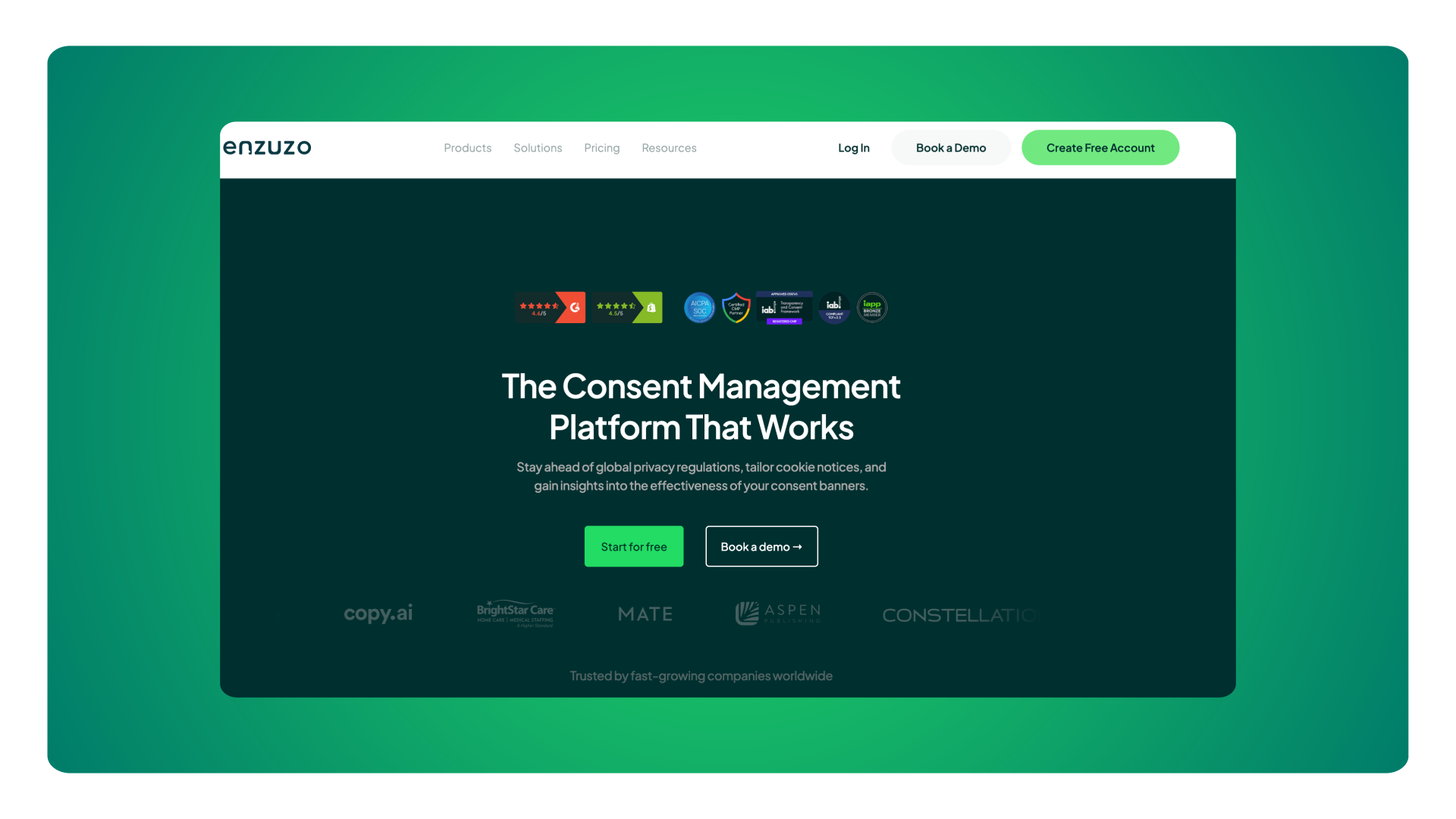
Best for: Agencies managing multiple client sites, mid-market companies switching from OneTrust or Osano, and any team that needs Google CMP Gold certification without enterprise pricing.
Enzuzo is a consent management platform (CMP) with Google CMP Gold Partner status, the highest certification tier. It supports advanced consent mode via Google Tag Manager, sends consent signals in both granted and denied states on every page load, and integrates with Google Analytics 4, Google Ads, and Floodlight without requiring custom code.
The consent analytics dashboard is one of the more practically useful features in this category. It shows opt-in and opt-out rates by region, banner performance over time, and consent trends that help marketing teams understand where to tune banner language or configuration. For agencies running consent management across client accounts, this level of visibility is hard to find at this price point.
Multi-domain support is included on paid plans. Setup is via a single line of code or through the Shopify, Webflow, or WordPress apps. The platform also handles DSAR automation (data subject access requests) and auto-generates privacy policies and terms of service that update automatically when regulations change.
Enzuzo also offers API access across all paid plans, which is a popular feature for compliance teams seeking custom configurations.
There's a free plan included for those wanting to test the service, with enterprise plans starting at $150/month. Compared to OneTrust at $10,000 per year minimum, Enzuzo is 80 to 90 percent cheaper for equivalent consent management functionality.

Advanced consent mode: Yes, on all paid plans via GTM. Free tier: Yes. Starting price: Free; paid plans from ~$14/month.
Not the right fit if: Your compliance requirements extend beyond cookie consent into internal data mapping, vendor risk assessments, or ROPA management. Those use cases require a full privacy suite.
Questions about Google consent mode? Book a call with a compliance expert or get started for free
2. OneTrust
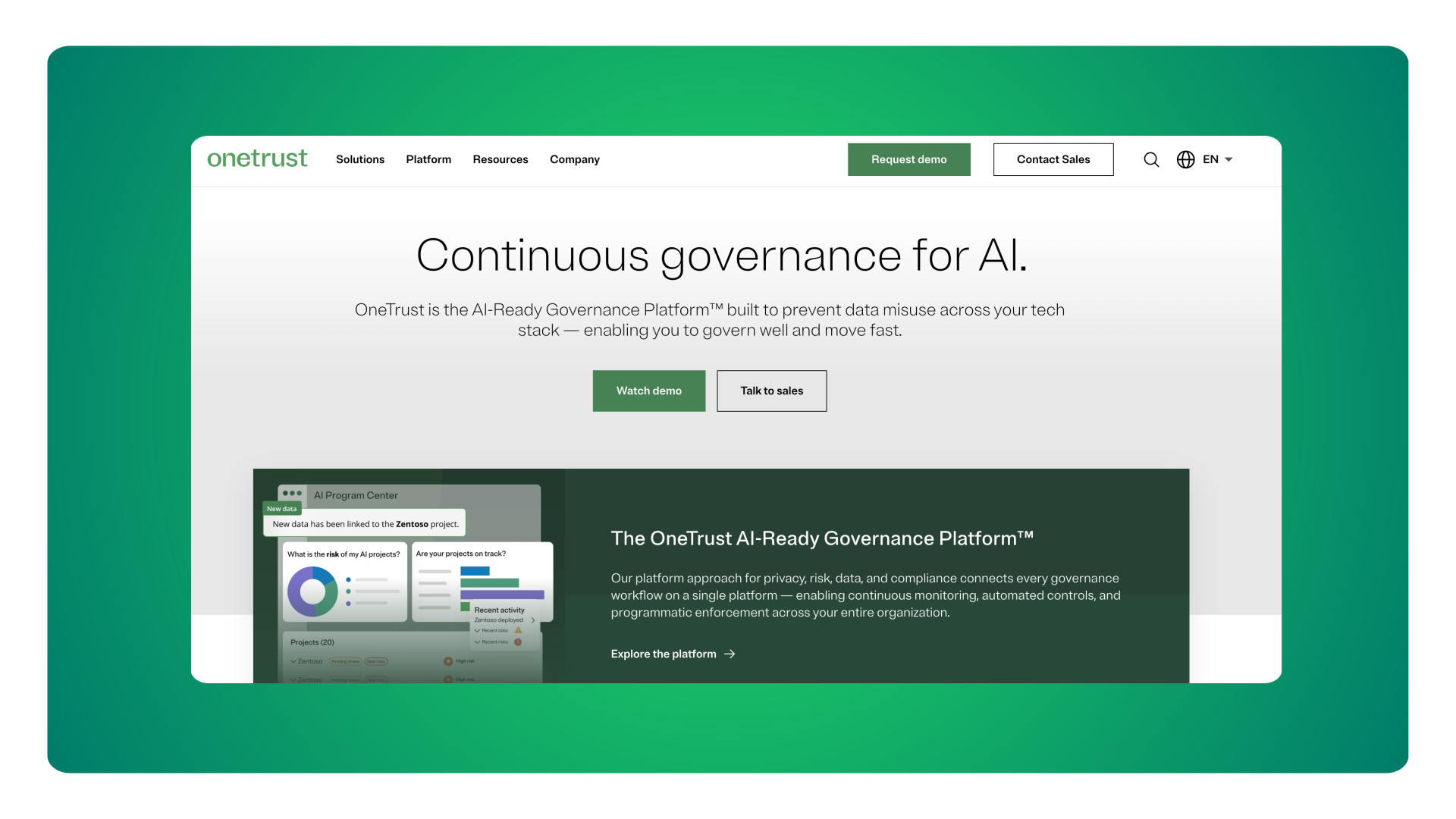
Best for: Enterprise legal and compliance teams that need a full privacy program, not just a CMP.
OneTrust is the market leader in enterprise privacy management. The breadth of the platform is real: data mapping, vendor risk management, ROPA generation, consent management, DSAR workflow automation, and internal policy management are all part of the suite. For a large legal team managing privacy across 50 domains and multiple jurisdictions, it is a genuinely comprehensive tool.
The problem is the price floor. OneTrust enforces a $10,000 minimum ACV as of 2026, regardless of your needs. For the vast majority of buyers reading this guide, that is paying for a platform whose core value is in the modules you will never use.
Advanced consent mode: Yes. Free tier: No. Starting price: $10,000/year minimum ACV.
Not the right fit if: You are managing fewer than 10 domains without a dedicated privacy and legal team. The pricing floor alone makes it the wrong tool for most mid-market buyers.
3. Osano
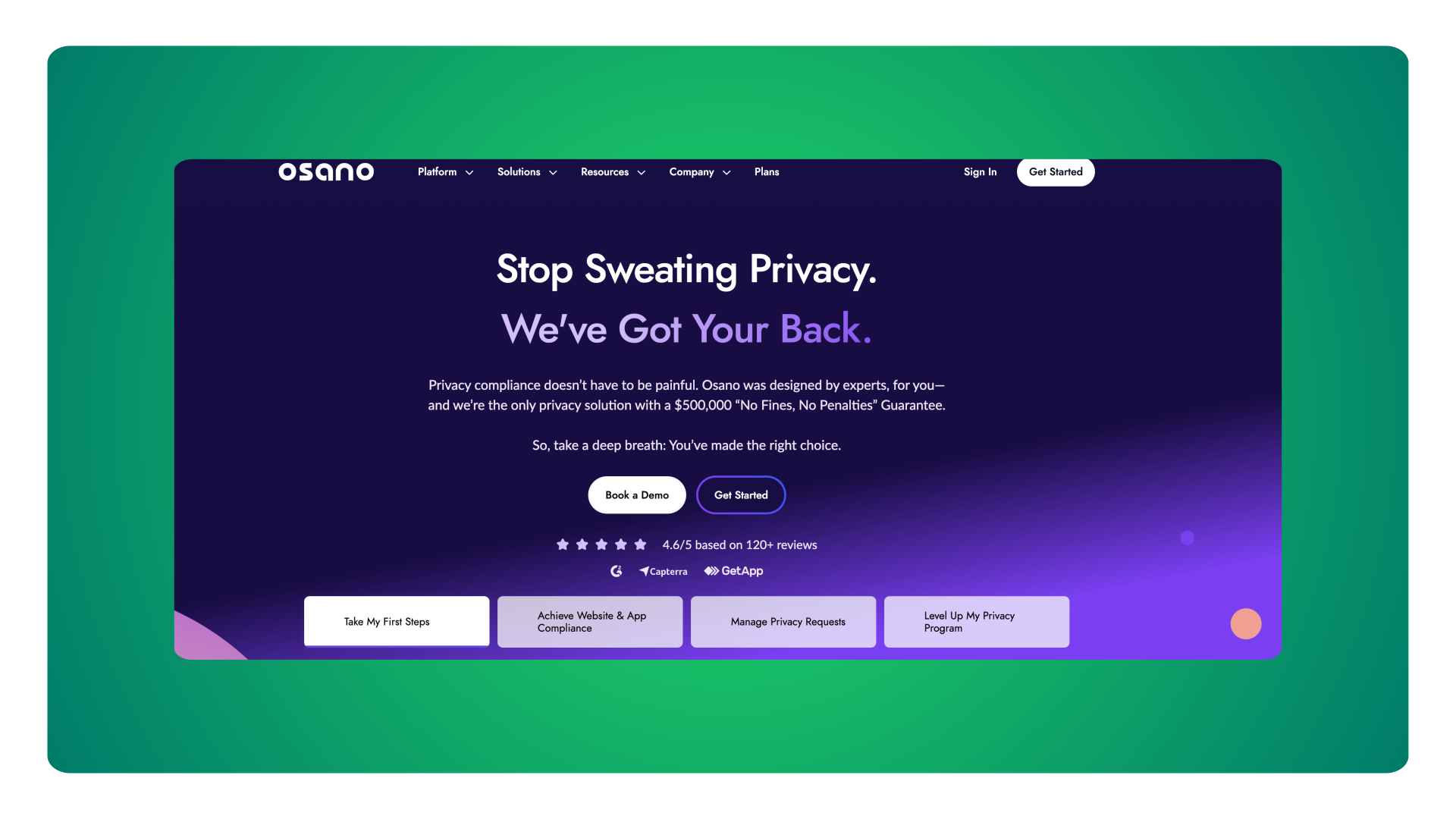
Best for: Mid-market companies that are expanding their privacy compliance programs.
Osano covers Google consent mode, cookie scanning, data subject request management, and vendor monitoring in one platform. The interface is cleaner than OneTrust and deployment is faster. It sits in a mid-market sweet spot with stronger feature coverage than pure-play CMPs and less complexity than full enterprise suites.
The pricing gap versus Enzuzo is the primary consideration. Osano recently removed all pricing mentions from their website, gating all discussions behind a sales conversation. This means plans are effectively similar to OneTrust, making it three to five times more expensive than Enzuzo for buyers whose primary need is consent management with advanced consent mode.
Advanced consent mode: Yes. Free tier: No.
Not the right fit if: Your use case is primarily consent management without the broader compliance workflow features. You are paying significantly for functionality you will not use.
4. Cookiebot
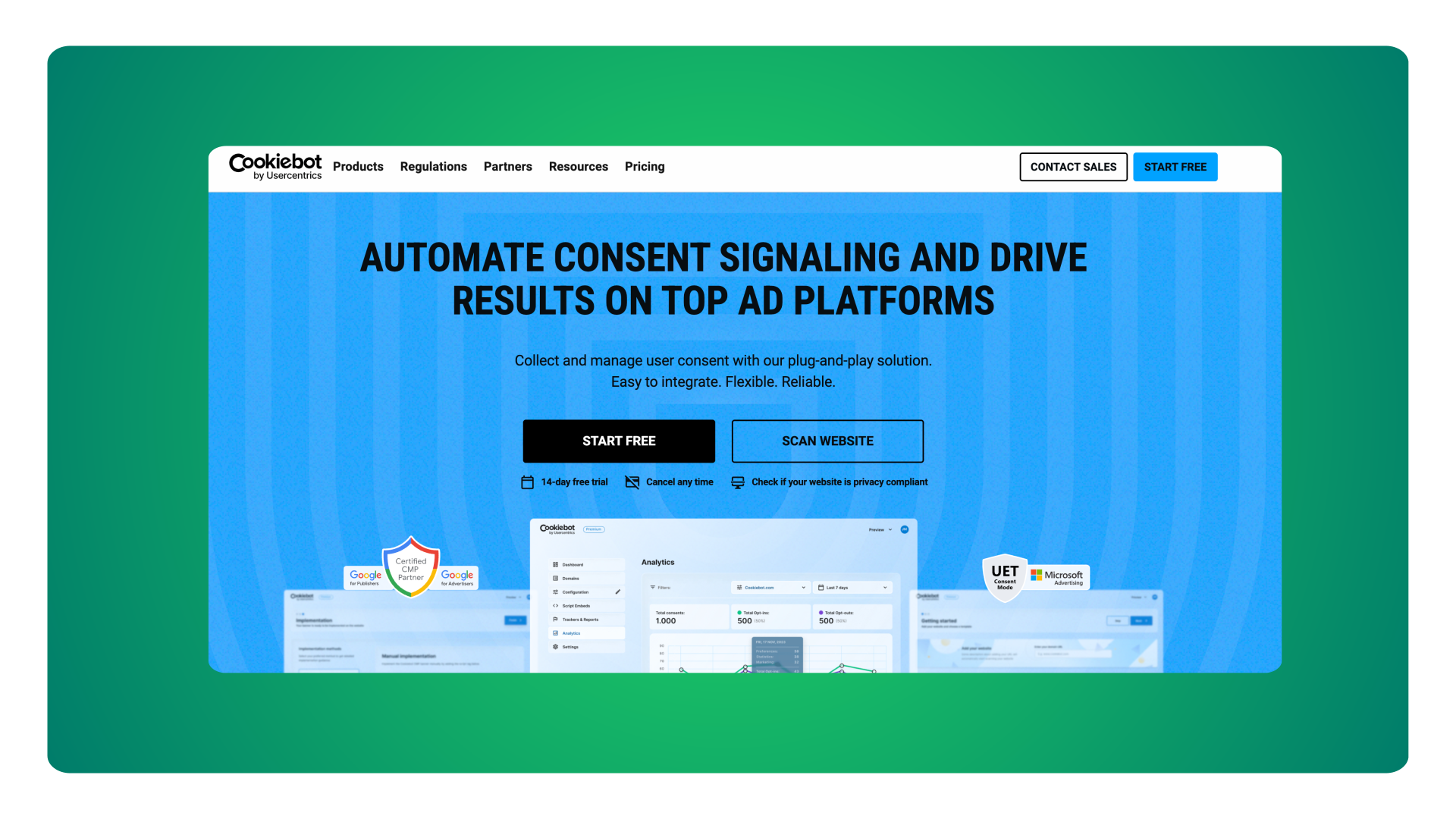
Best for: European businesses with a simple domain structure that need deep IAB TCF support.
Cookiebot has strong regulatory coverage and a long track record in the EU market. IAB TCF compliance is thorough, and the cookie scanning and categorisation is reliable. For a single-domain or two-domain business operating primarily in Europe, it is a solid choice.
The trap is the per-domain pricing model. At low domain counts the cost is manageable, but agencies or businesses managing five or more domains consistently report sticker shock when reviewing renewal invoices. The per-domain structure does not scale well for multi-site setups.
Advanced consent mode: Yes. Free tier: Yes, limited. Starting price: Per domain pricing; varies by domain count.
Not the right fit if: You are managing more than two or three domains. The per-domain pricing model makes this significantly more expensive than flat-rate alternatives at any meaningful scale.
5. CookieYes
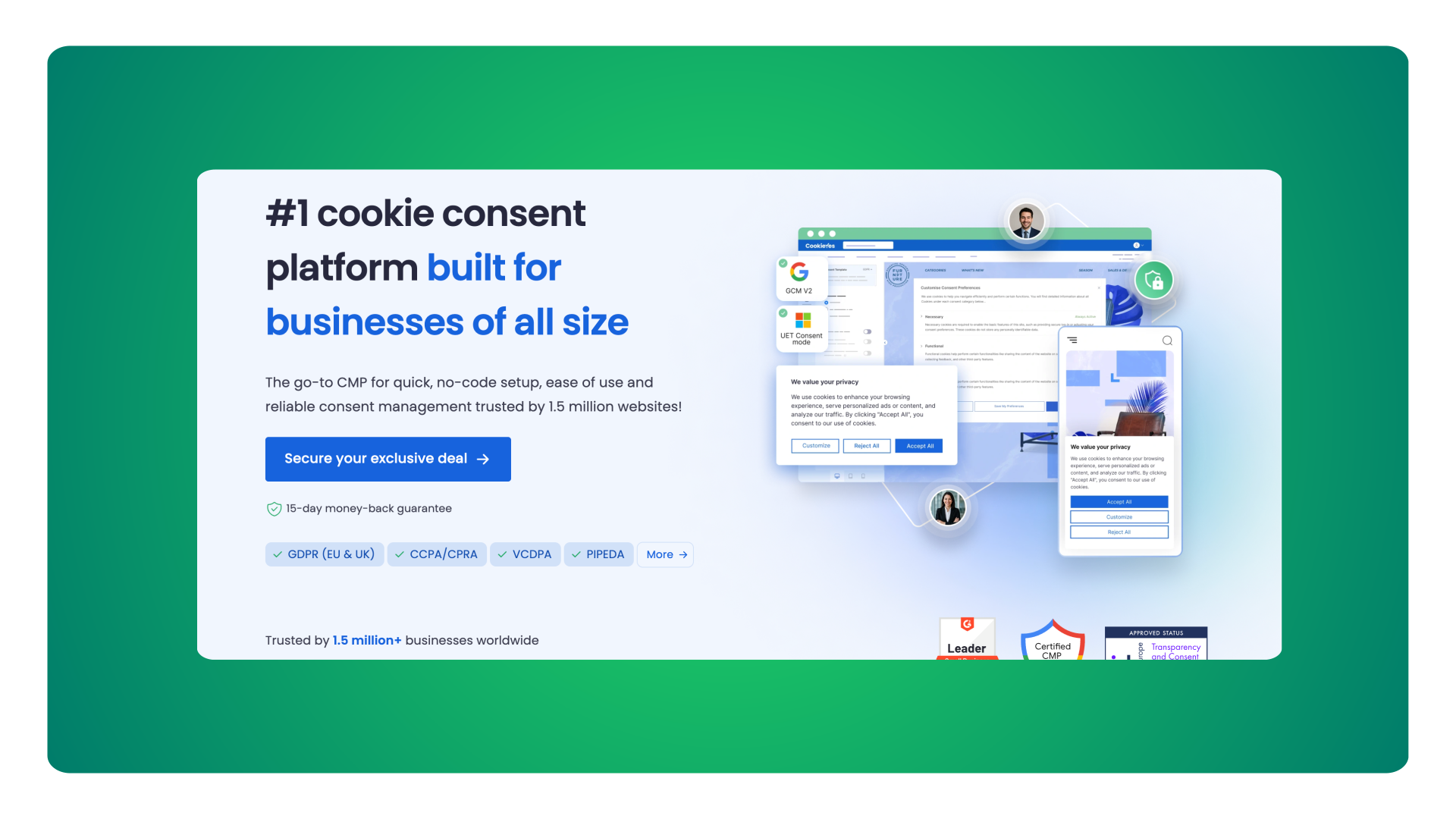
Best for: Shopify stores that want native consent management without Google Tag Manager.
CookieYes integrates natively with Shopify without requiring GTM, which matters for merchants who have not set up tag management infrastructure. The setup is genuinely fast, the free tier is usable for small sites, and the banner customisation covers most standard requirements.
The limitation is scale. CookieYes is optimized for single-site, Shopify-native deployments. Multi-domain management, advanced consent mode configuration across complex GTM setups, and consent analytics at the depth that agencies need are not its strengths.
Advanced consent mode: Partial (basic mode on free tier; advanced on paid plans). Free tier: Yes. Starting price: Free; paid plans from ~$10/month.
Not the right fit if: You are managing multiple domains, running complex GTM configurations, or need consent analytics beyond basic opt-in tracking.
6. Termly
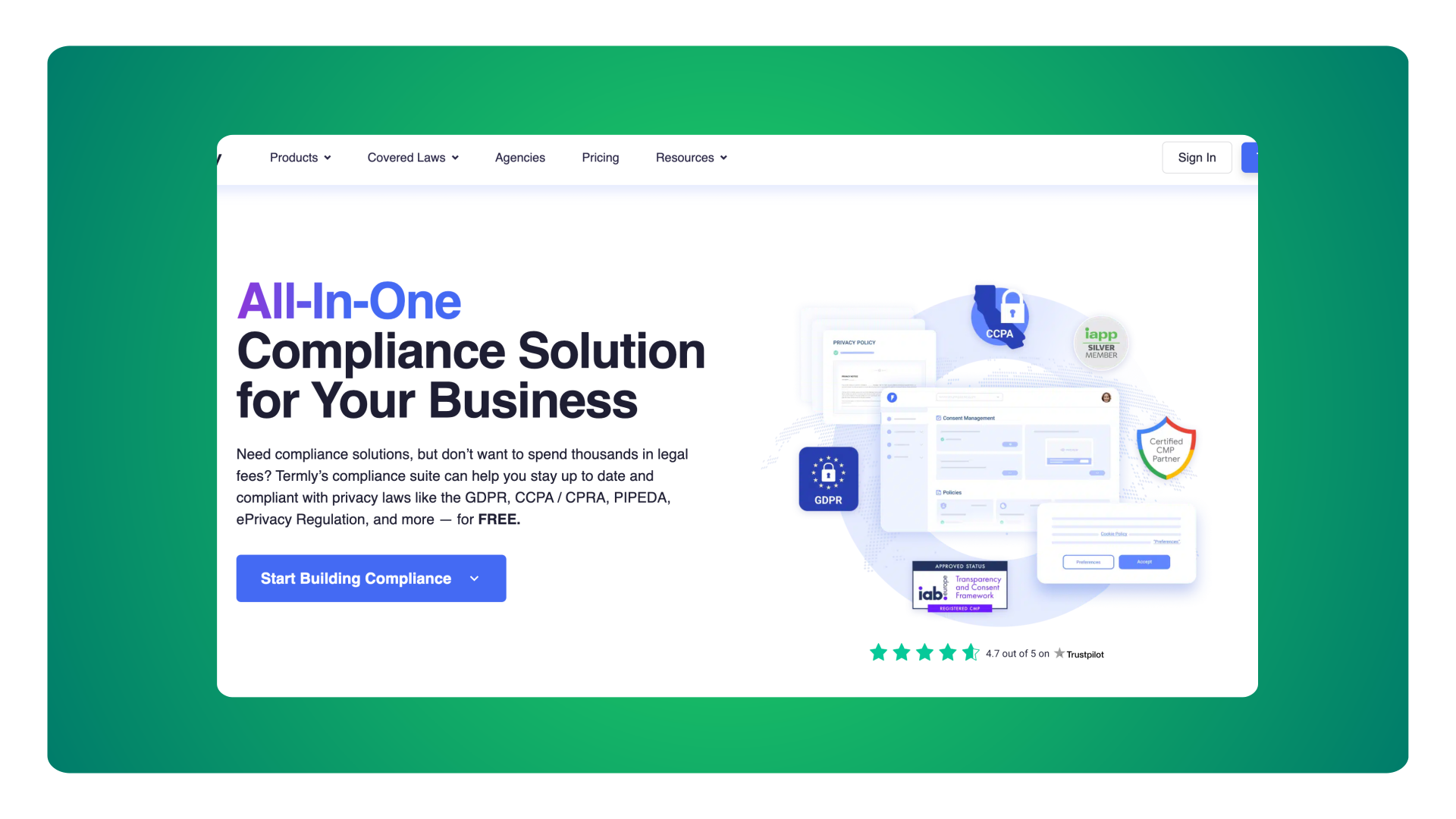
Best for: Solo operators and small businesses that want the fastest possible path to basic compliance.
Termly's free tier is one of the more genuinely useful ones in this category. Banner setup takes minutes, the privacy policy generator is included, and for a small business that needs to check the compliance box without a lot of configuration work, it gets the job done.
The limitation shows when ad measurement accuracy matters. The free tier supports basic consent mode only. If you are running Google Ads and care about conversion measurement fidelity in EEA markets, the free tier is not sufficient.
Advanced consent mode: Yes, on paid plans. Free tier: Yes. Starting price: Free; paid plans from ~$14/month.
Not the right fit if: You are running Google Ads campaigns where conversion measurement accuracy in the EEA is a priority. The free tier's consent signal handling will leave gaps in your data.
7. Ketch
Best for: Mid-market companies with mobile app consent requirements or complex cross-platform integration needs.
Ketch handles advanced consent mode correctly and its documentation is thorough, which matters when your engineering team needs to implement consent across web, iOS, and Android. For companies where consent needs extend beyond web into mobile apps, Ketch is one of the stronger options in the mid-market range.
The tradeoff is cost and complexity relative to web-only use cases. Ketch's pricing is higher than Enzuzo and comparable to or above Osano for equivalent web consent functionality. The value is in the cross-platform capability: if you do not need mobile app consent, you are paying for infrastructure you will not use.
Advanced consent mode: Yes. Free tier: Limited. Starting price: Contact for pricing (mid-market range, typically $500+/month).
Not the right fit if: Your consent requirements are web-only. The pricing and setup complexity are not justified for a single-channel deployment.
8. iubenda
Best for: European businesses that want privacy policy generation bundled with consent management, particularly in markets requiring multilingual support.
iubenda grew from the legal document generation side of the market into CMP functionality, which means its privacy policy generator and terms of service tools are genuinely strong. Multilingual support is well developed, and its regulatory coverage across GDPR, CCPA, LGPD, and Brazil's data protection law is broad.
The limitation is in the Google Consent Mode integration depth. The CMP functionality is solid for standard use cases but the GTM integration and consent analytics are less developed than Enzuzo or Cookiebot. For buyers whose primary goal is accurate Google ad measurement rather than legal document generation, there are better-optimized options.
Advanced consent mode: Yes. Free tier: Yes, limited. Starting price: Free; paid plans from ~$27/year for basic plans.
Not the right fit if: Google Consent Mode optimization is your primary goal. iubenda's strength is in the legal documentation layer, not in advanced consent signal configuration.
Quick reference comparison table
The table below compares all nine tools across the criteria that matter most for a Google Consent Mode implementation decision.
TL;DR: Enzuzo combines Gold certification, advanced consent mode, a free tier, and accessible pricing in one tool. OneTrust is Gold-certified but enterprise-only on price. CookieYes and Termly are the accessible free-tier options, but with partial or paid-only advanced consent mode support.
| CMP | Certified tier | Advanced consent mode | Pricing model | Best fit |
| Enzuzo | Gold | Yes | Varied | Agencies, mid-market |
| OneTrust | Gold | Yes | Enterprise contract | Enterprise legal teams |
| Osano | Silver | Yes | Per domain/plan | Mid-market compliance |
| Cookiebot | Gold | Yes | Per domain | EU single-domain businesses |
| CookieYes | Gold | Partial | Flat-rate | Shopify native |
| Termly | Gold | Paid plans only | Flat-rate | Solo / small business |
| Ketch | Silver | Yes | Contact for pricing | Mobile + web cross-platform |
| iubenda | Gold | Yes | Flat-rate | EU multilingual legal docs |
Compare Enzuzo against your current CMP. See pricing for your domain count and traffic level. Questions? Contact us or book a call
Basic vs. advanced consent mode: which does your CMP support?
Advanced consent mode sends consent status signals on every page load, including denied and unknown states. Basic consent mode only fires Google tags after a user has actively given consent.
Advanced consent mode allows Google to model conversion data from sessions where consent was denied or not yet given. Basic consent mode cannot do this. For any business running Google Ads campaigns in the EEA, the difference in measurable conversion data is significant: Google's own data shows advertisers using advanced consent mode recover 65 percent of ad-click-to-conversion journeys that basic mode loses entirely.
Learn how to implement Google Consent Mode using Enzuzo's step-by-step guide
This distinction is not a technicality. It determines whether Google can model your conversion data in regions where consent rates are low or variable.
How basic consent mode works: When a user visits your site, the consent banner fires. If the user accepts, Google's tags (GA4, Google Ads conversion tracking, Floodlight) activate, and data flows normally. If the user declines or ignores the banner, no tags fire and no signal is sent. Google sees nothing from that session.
How advanced consent mode works: When a user visits your site, your CMP immediately sends a consent status signal to Google before any tags fire. That signal can be "granted," "denied," or "pending." When the signal is "denied" or "pending," Google does not activate its measurement tags, but it does receive the signal. Google uses aggregated, anonymized signals from denied and pending sessions to model conversion data using its Consent Mode modelling algorithms (source: Google Ads Help, "About Consent Mode").
Why this matters for your campaigns: In markets with lower consent rates, such as Germany and France, where opt-out rates frequently exceed 50 percent, a CMP running only basic consent mode leaves a significant portion of your conversion data unmodelled. Google's own data indicates that advertisers using advanced consent mode recover 65 percent of ad-click-to-conversion journeys that would otherwise be lost. For any business running paid campaigns in the EEA, this is not an optional configuration.
How to check which mode your CMP supports: In Google Tag Manager, open your consent initialization tag. If it fires a gtag('consent', 'default', {...}) command before any other tags execute, you are running advanced consent mode. If consent signals are only sent after user interaction with the banner, you are on basic mode.
All paid Enzuzo plans support advanced consent mode via GTM without any custom scripting. The consent signals are sent through GTM's consent API automatically.

Frequently asked questions
What is a Google-certified CMP and do I need one?
A Google-certified CMP is a consent management platform that Google has verified meets its requirements for IAB TCF 2.2 compliance, consent signal transmission, and audit logging. You need one if you use AdSense, Ad Manager, or AdMob to serve ads to users in the EEA or UK. As of January 16, 2024, Google requires certified CMPs for all partners serving ads in those regions. If you are only serving ads in the US with no EEA traffic, a certified CMP is not technically required, but it is considered best practice for GDPR preparedness.
What is the difference between basic and advanced consent mode?
Basic consent mode fires Google measurement tags only after a user gives consent. Advanced consent mode sends consent status signals to Google on every page load, including sessions where consent is denied or pending. Advanced mode allows Google to use modelled conversions to recover measurement data from non-consenting sessions. For advertisers running campaigns in the EEA, advanced mode is the recommended configuration because it recovers a meaningful share of conversion data that basic mode leaves unmeasured.
Which Google-certified CMP is best for small businesses?
For most small businesses, Enzuzo or Termly are the right starting points. Both have genuinely usable free tiers. Enzuzo supports advanced consent mode on paid plans and includes multi-domain management, consent analytics, and DSAR automation. Termly's free tier covers basic consent mode and is the simplest setup if compliance is primarily a checkbox requirement and Google Ads measurement accuracy is not a priority.
Which Google-certified CMP is best for agencies?
Enzuzo is purpose-built for agency use cases. Multi-client login, multi-domain management, consent analytics by client, and flat-rate pricing that does not compound with domain count make it the most cost-effective option for agencies managing compliance across multiple client sites.
"It's super easy for implementation and scalability," according to Laura P. from Command Media, an Enzuzo agency customer.
Can I use a free CMP for Google Consent Mode compliance?
Yes, but with caveats. Several Google-certified CMPs have free tiers, including Enzuzo, CookieYes, Termly, and iubenda. Free tiers typically support basic consent mode, which satisfies the certification requirement for serving ads in the EEA. However, free tiers generally do not support advanced consent mode, which means conversion data from non-consenting sessions is not recovered through modelling. If you are running any meaningful Google Ads spend in EEA markets, a paid plan with advanced consent mode support will recover material conversion data that the free tier cannot.
How much does a Google-certified CMP cost in 2026?
Pricing ranges from free to $10,000 plus per year, depending on use case and vendor. Free tiers are available from Enzuzo, CookieYes, Termly, and iubenda for single-site basic use. Osano and Ketch run approximately $1,000 per month and above. OneTrust has a $10,000 minimum ACV. For most teams whose primary need is Google Consent Mode compliance with accurate ad measurement, Enzuzo's paid plans offer the best value relative to certification tier and feature depth.

Osman Husain
Osman is the content lead at Enzuzo. He has a background in data privacy management via a two-year role at ExpressVPN and extensive freelance work with cybersecurity and blockchain companies. Osman also holds an MBA from the Toronto Metropolitan University.